دور وكلاء الذكاء الاصطناعي في التحول الرقمي
.png)


Introduction
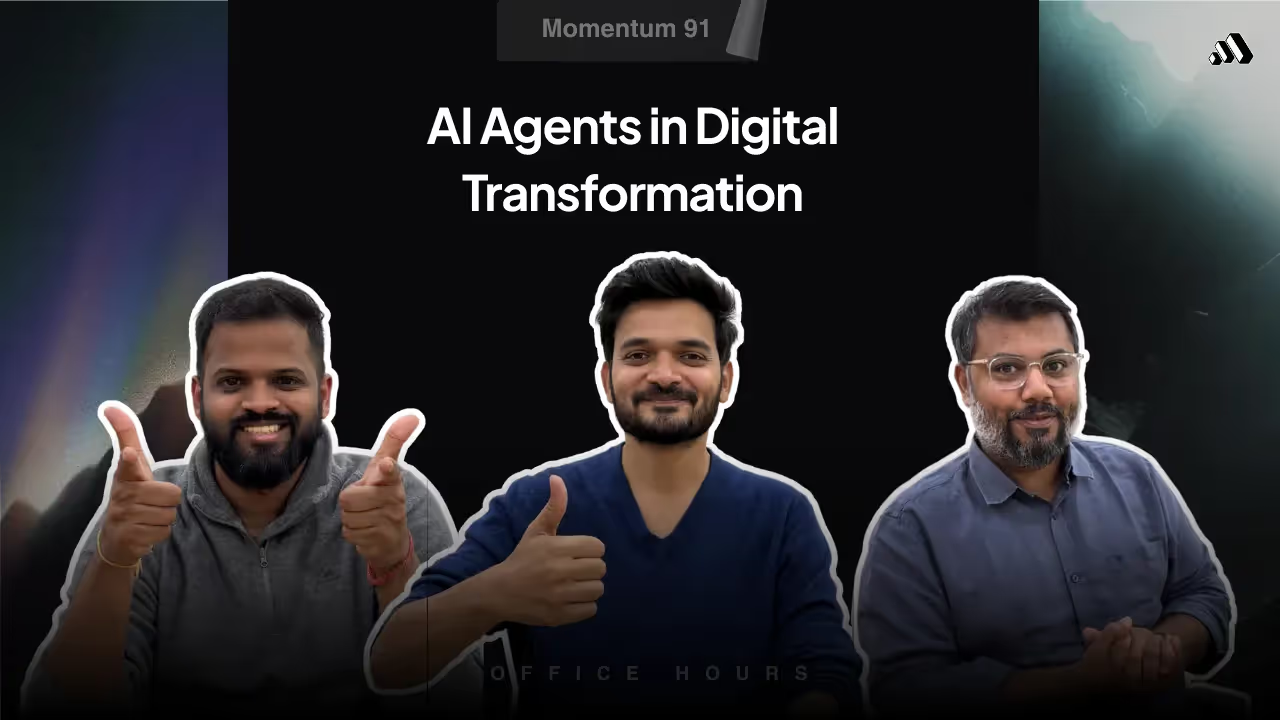
In this conversation, the co-founders of Momentum91 discuss the role of AI agents in digital transformation, focusing on their applications in various sectors, implementation strategies, challenges, and the importance of data security. They emphasize the need for businesses to understand their pain points and how AI can enhance efficiency and scalability while aiding human efforts rather than replacing them. The discussion also highlights resources available for small business owners to navigate the AI landscape and address concerns regarding data security.
Key Takeaways:
- AI agents are autonomous systems that perform predefined tasks.
- Understanding pain points is essential for effective AI implementation.
- AI can significantly improve scalability and efficiency in business processes.
- Data collection and integration are critical for AI success.
- AI agents can handle large datasets more efficiently than humans.
- AI should augment human capabilities rather than replace them.
- Achieving 100% accuracy is crucial in finance and accounting.
- Small business owners need clear resources to understand AI tools.
- Data security concerns must be addressed when implementing AI.
- The successful implementation of AI can generate substantial value for businesses.
Transcript
Yash From Momentum91 (00:00)
Okay, it says that we are live. Now we don't know whether we are and if we are then for all the people who are watching this is the first time that we are using a new platform and so we just want to make sure that we are really live and so Koushik is checking whether we got a feed going on onto a profile.
Koushik From Momentum91 (00:07)
Yeah.
Yash From Momentum91 (00:27)
Then once we get a confirmation that the feed is ongoing, we will start the session. Not yet. No, not yet. Not yet. OK. It shows 40 seconds. Can you check on YouTube?
Koushik From Momentum91 (00:35)
good.
Yes.
Yash From Momentum91 (00:41)
Yeah, just, okay. It says that it will start soon.
Jay From Momentum91 (00:47)
I guess we are.
Yash From Momentum91 (00:49)
Perfect. So we are live on YouTube that I know for fact. I'm not sure about LinkedIn. We'll figure it out now. But since we are live, we've got to take this on at least one channel. We've got to take this forward. So we'll start the session. So hello and welcome to Momentum Officers. My name is Yash and I'm joined by my co-founders Jay and Koushik to discuss topic of the week.
Yash From Momentum91 (01:14)
role of AI agents in digital transformation. Our goal with these conversations is to provide you with actionable insights and practical strategies that you can apply to your own business. Throughout the session, we encourage you to engage with us by asking questions and sharing your thoughts. This is a fantastic opportunity to learn from each other and gain new insights that can help drive your digital initiatives forward. So let's get started. Jay, Koushik, how are you doing today?
Jay From Momentum91 (01:40)
doing it.
Koushik From Momentum91 (01:40)
Good, good.
And we are live in LinkedIn,
Yash From Momentum91 (01:43)
We're live on LinkedIn also? Okay, that's good to know. so finally, so the platform works. We know that there is some very simple basic functionality that is working as expected. But I know for a fact that Jay is excited because he's going out for a travel and Koushik is relieved because he's just come back from one. And so Koushik, can you talk about how was your trip and then we'll move to Jay.
Jay From Momentum91 (02:06)
Yeah.
Koushik From Momentum91 (02:12)
Yeah, it was great. So we had a meeting with a client. So usually all the clients that we work with, we have this phase where we try to understand their business. try to see how the implementations or the platforms that we build for them could go about. So in depth, so we sit with the entire team. So we had like...
Like every single, the entire week we had meetings and every day we had like five to six hours of meetings. We calling department by department and we sitting with them and opening all their books. And you know, seeing their legacy systems and trying to understand how they have been currently doing. So very long meetings, I think, but yeah, it is all it is.
Yash From Momentum91 (02:46)
Yeah
Yeah,
it's an interesting digital transformation project that currently Koushik is working on. And Jay, you are going on a different kind of a trip and that we can say from the smile that we see on your face. Talk about that a little. Why are you going? What are you doing?
Jay From Momentum91 (03:11)
yeah sure, just thought to have some adventures during this year and to get started with planning to go on a trip where I'm learning to surf.
So I'm going to one of the well-known places in India for especially for surfing it's also will be staying there in South school only and Morning, it's like from 7 a.m. To 11 a.m. You are learning how to surf and remaining part of the day you are working Maybe in the evening if you want to explore the city you are doing that as well So that's where I'm coming from the smile that you see today is yes because of I saw sunrise while staying doing the packing because was working last night, but
Yash From Momentum91 (03:40)
Mayfair.
Hahaha
Yeah.
Koushik From Momentum91 (03:48)
Nah.
Jay From Momentum91 (03:48)
full energized
for work plus learning new skills.
Yash From Momentum91 (03:52)
for the,
for what they call, workation is what it's, it was popularly known as. But interesting, yeah, surfing is something that a lot of, I don't know, like you are the only person that I know is pursuing surfing. Yeah, interesting. So coming to the conversation that we want to have, right, which is essentially the role of
Jay From Momentum91 (03:55)
of holy.
Koushik From Momentum91 (04:03)
It was us. Exactly.
Jay From Momentum91 (04:05)
Well, am trying it for the first time. So let's see how it turns out.
Yash From Momentum91 (04:17)
AI in digital transformation and largely will be focusing on AI agents and what they are doing for organizations in different sectors, primarily retail, distribution, manufacturing, because these three sectors are something that we understand really, really well, having deployed a few projects, worked with a few clients, understanding a few use cases. But before we go deep into the conversation, Jay, if you can explain to us what is an AI agent,
I mean, what is like, I, we came across like machine learning and natural language processing, and then we had AI and then generative AI. within that, we were talking about large language models and all of those things. And then now we've been hearing about AI agents as well. So can you give sort of a brief around what are AI agents and what's the, what's the general use case for those?
Jay From Momentum91 (04:54)
Great.
sure.
So let me try to explain it in a very simpler format. All of us are very much aware of generative AI where we are asking certain questions to chat GPT or any other model. And based on that, we getting some answers. Many people are using it for creating some form of content or drafting some emails and things like that. Now, think of it this way that this generative answers are there for sure. But along with that, if there are
certain set of tasks which are supposed to be done. for this, so basically AI agents, can say typically are an autonomous system, which uses machine learning, NLP and data understanding of data. And it basically does some predefined tasks.
The advantage it has or the difference, so like many times people do confuse AI agents with automation, right? If there is some automation happening, it doesn't necessarily mean that AI agent is working on that. The preliminary difference would be here. There is some amount of data-driven decision-making that is happening. So AI agents are preliminary autonomous systems which are doing some tasks and they are using machine learning NLP and...
obviously data understanding based on which it will do the task. As we go along, I'll share across some examples which will give the clear definition and differences between what is automation and what we can consider as AI agents and how they are significantly more effective in getting things done.
Yash From Momentum91 (06:35)
Correct. And Koushik, while you ask your question around AI agents, if you can look at the screen and make sure that your face is visible, because it seems like you're a little far away from the camera and part of your face goes behind your name. So if you can just adjust the frame, that would be great. Perfect.
Koushik From Momentum91 (06:51)
Yeah. Yeah. So I was trying to understand Jay, like for example, let's say if I'm a business owner and I'm, I have multiple departments in silos, right? So how, how do you map what use case according to my business and how would you go about, like, what would be the blueprint for this for me? If, I have to go about implementing this.
Jay From Momentum91 (07:11)
Right. So for a business owner who wants to, you know, utilize AI agents for the digital transformation, initially, the very first step would be, I would say, to understand what are the pain points in the current processes, right? So every just similar steps to what we have in I mean, digital transformation in general. Now in that, once you've identified those pain points, what you need to do is then start with
like low risk AI automation use cases, figure out what are those. And then based on that, you need to also ensure that AI is also aligning with the business goals. And then you need to, I mean, leverage some form of expertise. So let me go step by step into this and explain on what and how this needs to be done. So first you understood what are the pain points and what needs to be optimized. Based on this, you'll figure out that, OK, for this set of use case,
you need to understand what model will be most useful, what sort of architecture of the model will be useful for the same. And then based on that, you also need to have well-set other infrastructure. it's not that we inherit AI agents in the system and things get done.
There are lot of other things which needs to be figured out when we are talking about using AI agents for digital transformation. that would preliminary include a form of collection of data. So I would say customer data platforms need to be set well, where data is getting captured from multiple places. All those data once it is gathered, it should be passed and connected through API with AI. The AI model understands this data.
AI model also needs to be trained upon this. So largely, I would say first collection of data needs to happen from there. You need to integrate AI so that it understands the data and then you need to train AI so that it knows how to predict or how to do certain set of actions based on what use cases and along with that, need to also so if it is related to user engagement, then you also need to make sure that you know you are having systems ready for
getting user input along with that most likely you need to understand what sort of preference is need preference needs to be there and you also need to understand where like contextual personalization is happening. largely understanding of model understand having a knowledge of you know what model to use and how to train the same and how for it how should it interpret the data. So for people
who are business owners who might not know well with respect to what sort of AI model is there, which is best suitable for them and you know how to integrate things. They just need to, I would say one should consult the partners, but then these partners needs to be evaluated in form of what sort of understanding they have with respect to use case models along with that how they are, you know, managing the system which I mentioned. So yeah.
Yash From Momentum91 (10:08)
So let's take up a case, And so that we are able to sort of, think highlighting and understanding the difference between what automation can do and what AI agents can do is a little important. So let's take case of a client that we have. So we have a client who does office space interior design, like commercial real estate design for offices that are 10,000 square feet or higher.
Jay From Momentum91 (10:21)
Yeah.
Yash From Momentum91 (10:33)
And so the process that they have is once they close a deal, they will do a 3D design for the whole, let's say 10,000 square feet space. They'll get approval from the client for the whole space. then they will have to, so once they get the approval, they will have to start building the office. And one of the key things that they need to do is to prepare this thing called DOQ. So how much glass is going to be there, how many chairs, how many tables, how many air conditioners and fall ceilings and
raceways and all of those things. So all of us can relate to working in an office and all of us see the things that we use and we are sort of surrounded by these things. So I think this example could be helpful. In the process, what they previously used to do is a person would look at the 3D design and figure out, so a person would look at both 3D as well as 2D design and then figure out what is the bill of quantity.
how much amount of glass panels, how many doors, how many washrooms, how many tables, how many chairs and stuff like that. And then they'll prepare it. They'll send it out to different vendors for procurement. They'll look at the quotes and then they'll have their own method of selecting the vendor. It's not always the price, but they'll have their own method of selecting the vendor. And then they'll procure the materials and start building the office. In this particular example, what
is the thing that an AI agent will be able to do or achieve reasonable amount of efficiency in this procurement process for an office of 10,000 square feet that is being designed by a client.
Jay From Momentum91 (12:05)
Yeah, right. So to answer that, let's try to first categorize AI agents and then we come to this answer, right? So I would say there are certain types which we can define the agents. What could be?
a rule-based where it is just following predefined rules of JODAN. Second would be machine learning agents where it will be learning from data and then it will be improving over the time. The third would be conversational agents, which we basically consider AI chatbots, virtual assistants and likewise. And the fourth would be autonomous decision-making agents, are basically doing some form of AI, a lot of use cases, but AI predictive maintenance or fraud detection
or based on the industry, these could be there, right?
Now, for the use case that we are talking of our client, it's mostly related to automation where things are predefined, where we know that these are the set of materials and there will be pricing based on some vendors which we already have. this is a good example where it's more of all the database are well stored in the system and based on the use case, this thing needs to be generated.
But how AI can efficiently do this is more based on scalability. So uses of AI agents can be multiple. It could be to improve the scalability or to the efficiency or to handle the large data sets here. If the data sets is very large, if we see that if a human is basically doing this activity where you know.
As you mentioned 10,000 square feet or higher. So what happens is a lot amount of data needs to be figured out. What are the items? If you try to prepare things based out of it, a human when it's done, it will take a lot amount of time. And then sending this data. So you may use some automations which are just, you know, where a human intervention is there.
but still they have to pick and fetch certain data and then based on that they create a BoQ and then ask for the quotes and things like that. What happens is this process can be optimized by using AI agents where you know they
typically understand what client is needing based on the initial discussion and where the preliminary conversation happened. AI agents are going to fetch the data based on what discussion happened with clients, what sort of the requirements are they will be able to predict that okay, this is the requirement that it already has created user personas in backend. So it understands that okay, this set of clients, it has been a repeated pattern where they might need these set of materials or these set of items. So it also includes things like that in BoQ and then
it passes on to human. sorry passes on to vendors. So what happens basically the difference is clearly visible. One thing would be a scalability. If this if there are a lot of requirements and then there is a limitation of people who are getting it done also a lot amount of time gets used. AI agents can do these things significantly faster at a very larger scale because they can handle this data and more importantly there will be less amount of errors in terms of
Once the model is trained well, will be less amount of errors in terms of predictability on what sort of personalized things need to be given. So hyper personalization will be even more effective in terms of delivery. And that's how the overall organization can deliver great value to their customers.
Yash From Momentum91 (15:19)
So what were the, sorry before Kaushek jumps in, so what were the four categories that you said? You said conversational, you said decision making.
Jay From Momentum91 (15:29)
Yeah, so sorry. So the first one would be very rule based that is just following the predefined rules. Second would be machine learning agents, which are mainly towards just the learning part of it. So it will be learning the data and it will improve over the time. But then it needs to be connected with other agent to get things done. if we're talking about multi agents being connected with each other and getting things done. the third one was conversational. And the fourth one would be like autonomous decision making agent, which is basically
Yash From Momentum91 (15:33)
rule based.
Hmm.
Jay From Momentum91 (15:57)
you know, fetching the data from machine learning agents and then it will be taking some actions. It will be more related to decision making.
Yash From Momentum91 (16:05)
And so would this be a good framework to think about, right? Which is where, you know, like a business leader could look at their business and identify what are the pieces where people are having conversations that can be had without involving people. And so those pieces can become part of conversation. What are the pieces where, you know, very basic rule-based decision-making is being done by my people if I'm that business leader, then by my...
Jay From Momentum91 (16:12)
Yeah.
Yash From Momentum91 (16:33)
by my people. I would sort of, so that's an interesting way to categorize all the processes that I have in my organization and think that, these are the places where significant amount of time, effort, energy is wasted and it can be made more productive using AI. Great way to think about it. So, but Koushik, you had a question.
Jay From Momentum91 (16:46)
Yeah.
Before Koushik asked the question, as you mentioned that, so this is very interesting, right? Where the business owner does not necessarily need to think on where the human part can be just replaced. That is one way to look at it. But the more focus is not just on replacing, it will be more related to aiding humans for getting things done faster, right? So it will be like AI augmented work, but.
Koushik From Momentum91 (16:54)
Yeah.
Yash From Momentum91 (17:14)
Got it.
Jay From Momentum91 (17:16)
The preliminary ways to look into this is one, the scalability part. The second would be the cost efficiency. The third would be improving the speed and accuracy. Because in decision making, also, good amount of accuracy is needed in terms of understanding the data and getting used to it.
Yash From Momentum91 (17:32)
So same people
can deliver more value. Got it.
Jay From Momentum91 (17:35)
Exactly. Same people can deliver
Koushik From Momentum91 (17:35)
Yeah.
Jay From Momentum91 (17:36)
more value. Obviously it has its own challenges on the compatibility using technology and things. But yeah, I mean, it's more about aiding the people and not replacing.
Yash From Momentum91 (17:47)
Got it.
Koushik From Momentum91 (17:47)
I think I can add to that because I'll give a live example from the trip that I just came back from. So we were discussing about the entire digital transformation for this company and we were talking about how we could do about dealing with their finance and accounting module and doing things with that. And let's say we were discussing one aspect of cash reconsilations that happens across. Now they were telling me that they currently have a 10 people team.
who is sitting and just doing cash reconsolations and it's the same task that they are doing every month. Now they want certain sort of automation setup within the ERP systems that we are trying to set up for them. But even then, at certain business levels, will be ERPs could do only probably 80 to 90 % of it. There's still the 10 %
Yash From Momentum91 (18:18)
wow.
Yeah. Wow.
Koushik From Momentum91 (18:40)
of it, which still needs to be done by human because there are multiple factors involved. I could like we could say that, for example, let's say there's still a 10 % that is left, right? Like for example, there's a printer that they're buying and let's say there's an ink that they're changing for the printer that doesn't come under asset that comes under consumables. And like when I have like multiple consumables like that, how do I reconcile them?
that becomes a problem, petty cash becomes a problem. So all these things, which is very specific to retail industry. Now the problem is for the finance and accounting team, 90 % accuracy is not perfect. It has to be 100 % accuracy.
Yash From Momentum91 (19:15)
It's not
good enough, It's like healthcare, right? If I save 9 out of 10 people, it's not good enough. As a doctor, I've got to do more. I've got to save 10 out of 10. So for finance also, that's not good enough.
Koushik From Momentum91 (19:26)
Yeah, it's not good enough. 100 % it has to be. and they say, and they have been telling us that how can we solve this 10 % thing? Because there is no way even among the most advanced ERP systems to solve that 10 % because it's very specific to their business. Right. So that's when these AI based agents would come in place, right? I could create an entire prefixed code paths or workflows and orchestrate them.
Jay From Momentum91 (19:44)
Yeah.
Koushik From Momentum91 (19:56)
So that I know that this is a repeatable task that is happening only to this particular business. So, and it could talk back to your ERP system and you you could have it still, you know, logged and registered. So.
Yash From Momentum91 (20:07)
But if they,
Koushik, if they have nine people team just counting cash, are they underpaying us? Like that's my takeaway. If they have nine people counting this and this, but jokes apart, right? This is the, this is the state in the world's most finance forward economy, right? India has like the most finance forward economy where digital transact, like half of the world's digital transactions happen in India.
Koushik From Momentum91 (20:13)
You
everything right now.
you
Yash From Momentum91 (20:36)
half
of them, right? And so if in those places also you need to have separate teams, I'm sure even with developed economies, this is a bigger challenge.
Koushik From Momentum91 (20:52)
Yeah, but I had a question around this day. So for example, if I'm a larger, so currently the way as of BC is that if I have to have some sort of AI agents implemented for my business, should always, it's a matter of cost that comes in front of me, right? And if I'm a small business owner, do we have any tools or anything in framework currently as a small business owner that I could?
refer to because there's also lot of clutter around the topic there's no clarity at all right for me to understand what it is so that I can take informed decisions upon it because so how how so first is what resources as a business owner I can refer to or go to one so that I can get a clarity of thought which is not so technical but enough to make me you know make decisions about who should I reach out to or go for
Then second is that like what do are there any sort of platforms that exist that I could you know use or anything of that sort?
Jay From Momentum91 (21:52)
Right.
Quick answer from my side because we are talking about business owners which are into retail industry, manufacturing industry distribution or anything healthcare for instance as well. Now these people are really good in doing their business understanding it. I would not recommend them to look into any particular tool and see how things can be implemented in their own system. If they want to understand like how agents work, they can go for like taskkit.com or there a lot of things available in the internet to just understand what's how
What are the capabilities of AI agents? Taskkit is very basic example of you can just create your own AI agent, very small one and get things done. So for example, if you want to just write down any topic on LinkedIn regarding any particular thing, what it will do is it will actually look into internet, get things researched based on this. will just create a post and everything is happening in front of you. So you will be a little surprised on how things are done like this. This gives you an idea on the capabilities of AI, but then
And again, coming to the question, I would not recommend them to just look into any specific tools because see this answer is very industry specific. And also, rather than this, they might want to look into any partner who is specific specifically into these systems who are having a good understanding of AI models, good understanding of how to train agents and how to, know, calibrate them based on getting some decisions done.
the word with partners who can execute these things along with that then evaluating on their suggestions and recommendations would be more suggestive rather than looking for tools is what I have said.
Koushik From Momentum91 (23:18)
it's
I think they can always look into our podcasts and our blogs everywhere.
Jay From Momentum91 (23:33)
Yes.
Yash From Momentum91 (23:34)
Yeah, this is one
of those things where strongly recommended that just talk to a person about this. It's helpful. another thing that might be more helpful is that you just, Koushik, you asked this question just one week earlier than I would have wanted because we're writing an e-book, right? We're writing an e-book on this very specific topic, which is role of AI agents in digital transformation.
Koushik From Momentum91 (23:40)
Yes.
Yash From Momentum91 (24:00)
And once we write that, we'll link it in the description here as well. So that should be helpful. Another thing that I wanted to understand, Jay, from an AI agent sort of standpoint is, how does a typical implementation journey look like? So let's say the first part we've covered, which is where there are four categories you try and figure out as to...
Jay From Momentum91 (24:05)
you
Yash From Momentum91 (24:23)
you know, what all processes does a business have across these four categories? And then once you have some idea, you talk to a person who can do this for you. And then let's say you arrive at three or two processes that you want to have AI agents in. Once you arrive at that, then from that to, you know, success or that to promising that same amount of people will be able to generate more value. What is that journey?
من تحديد الهوية إلى اكتشاف الرحلة التي نريد إصلاحها لشعبي الذي يولد قيمة أكبر بمقدار 15 ضعفًا. كيف يبدو ذلك؟
جاي من مومينتوم 91 (24:59)
حق. لذا أعني، مرة أخرى، سيكون هذا خاصًا جدًا بالصناعة، أليس كذلك؟ لأنه لإعطائك مثالًا معينًا، دعنا نقول إنها صناعة تصنيع تقوم بصنع الطابعات. الآن، لنفترض أنهم توصلوا إلى حل، ويخرجون بسؤال، كما تعلمون، كل أربع سنوات هناك فترة توقف. وأريد، كما تعلمون، تحسين ذلك. ما يحدث هو أننا ندمج الذكاء الاصطناعي بالكامل
هيكل البيانات، نحصل على جميع نقاط البيانات من الطابعة، مثل ما أود قوله، كما تعلمون، يتم استخدام المعدات، وما تتكون منه وأشياء من هذا القبيل. في الواقع، يستغرق الأمر وقتًا حتى يفهم الوكيل، كما تعلمون، ما هي فترة التوقف، وكيف تحدث الإجراءات، وسيتعلم أيضًا مما يحدث في هذه السنوات الأربع أو على مدار أربع سنوات. كانت هناك دراسة جيدة جدًا مثل الدراسة الرئيسية حيث، كما تعلمون،
تمكنت الشركة من استخدام وكلاء الذكاء الاصطناعي لتحسين الوقت الإجمالي لوقت التشغيل الإجمالي من أربع سنوات إلى خمس سنوات ونصف إلى ست سنوات. وهذا يشبه زيادة ما يقرب من 45 إلى 50 في المائة وكان ذلك فقط من خلال وكلاء الذكاء الاصطناعي. مرة أخرى، كان هذا خاصًا بالصناعة. السبب في أنني أعطي هذا المثال هو أنني الآن سأصل الآن إلى النقطة التي طلبتها. لذلك بمجرد فهم نقاط الألم، بمجرد أن يقرر الشريك كيف تسير الأمور
من الواضح مرة أخرى الإعداد على مثل CDPs التي تشبه منصة بيانات العملاء ومنصات بيانات العملاء. بادئ ذي بدء، تحتاج إلى تحديد واضح جدًا لكيفية سير الأمور. وسيكون أول شيء هو إعداد أنظمة يتم فيها جمع البيانات بقوة كبيرة. لذلك هذا واحد. ثانيًا، سيكون دمج الذكاء الاصطناعي الصحيح. لذا فهم أولاً أنه، حسنًا، بالنسبة لحالة الاستخدام المحددة هذه، تحتاج إلى دمج هذه المجموعة من الذكاء الاصطناعي. ثم بناءً على هذا،
عليك فقط البدء في تدريب النموذج. لذا فإن المرحلة الثانية ستكون تدريب النموذج. أما الخيار الثالث، والذي سيتم تشغيله بالتوازي، فيتعلق أكثر بنوع القرارات التي تريد أن تتخذها نماذج الذكاء الاصطناعي. وبناءً على ذلك، يجب أن يحدث التدريب. يجب مراقبتها، ويجب تغييرها في جوانب معينة أيضًا. ومع ذلك، فإن الجزء المهم والحاسم للغاية، والذي أعتقد أننا فقدنا التحقق منه، هو
هناك بعض القيود أيضًا، أليس كذلك؟ ويجب أن يكون هذا أيضًا موضوعًا شائعًا. وأود أن أقول أنه يجب التستر عليه في هذه العملية. شيء واحد سيكون التحيز. لذلك مهما كان النموذج الذي نختاره بناءً على أي تعلم تم التوصل إليه، فهناك حالات يظهر فيها قدر من التحيز. نحتاج إلى تقييم ما إذا كان، كما تعلمون، يعطي بالفعل بعض التحيز في حالة الاستخدام الخاصة بنا أم لا. لذلك هذا واحد. سيكون الجانب الثاني هو جانب الامتثال.
حيث يتم الاهتمام بالأمن والامتثال من خلال تنفيذ ذلك. لذا فإن الثالث سيكون فهم كيف ومتى، مثل كيف سيساعد البشر وأي جزء من عمل البشر سيتم استبداله منه. لذلك أثناء قيامنا بعملية جمع البيانات هذه، وتدريب الذكاء الاصطناعي، والتأكد من ضبط الامتثال بشكل جيد واختيار النموذج بشكل صحيح وتدريبه في هذا الاتجاه، وكذلك التحديد من خلال تصميمات الخدمة
أين ما هو دور البشر؟ ما هو دور الذكاء الاصطناعي؟ لذا أيًا كان ما ناقشناه، كما تعلمون، من خلال أي شيء تتم مناقشته مع Paushy في ذلك اليوم المحدد حول تصميم الخدمة، والمخطط، سيكون هناك نظام آخر، كما تعلمون، شخص أو سيقول نظامًا آخر تتم إضافته إلى هذا. وهذا سيحل محل جزء البشر. ولكنها أيضًا ستساعد البشر على إنجاز الأمور بشكل أسرع. هكذا سيبدو الهيكل بأكمله. من الواضح أن الجدول الزمني. آسف.
من الواضح أن الجدول الزمني يمكن أن يختلف من حالة إلى أخرى لأننا نتحدث عن الكثير من حالات الاستخدام وهي محددة للغاية. لكن هذه هي الطريقة التي وضعتها بشكل أولي.
ياش من الزخم 91 (28:33)
نعم، بالطبع.
حصلت عليه. وقبل أن نطلق سراحك، أعلم أننا نقترب من نهاية محادثتنا، ولكن قبل أن نتركك، هناك شيء أخير فقط، لأننا ذكرنا هذا بشكل متكرر تقريبًا في جميع الإجابات. أحد الأشياء التي تظهر هو أنه يجب تنظيم بيانات العميل. وهكذا بدون ذلك، يبدو الأمر حاليًا وكأنه غير منظم ويعيش في ذهن قائد الأعمال أو
الشخص الذي يدير الشركة إلى حد كبير هو بمثابة نظرة نمطية لما رأيناه. لكن تحدث عن هذا قليلاً، حيث، دعنا نقول إذا كانت البيانات منظمة، ما نوع ميزات الأمان، كيف أفعل ذلك، لذا فإن أحد المخاوف التي تساورني هو أنه إذا تم تنظيم بياناتي واستضافتها في مكان ما، فكم عدد الأشخاص الذين يمكنهم الوصول إليها؟ هل سيتم سحبها؟ لا أريد أن أفعل ذلك. لذا فإن أحد المخاوف من أن الكثير من شركات السوق المتوسطة على الأقل
تمتلك شركات السوق المتوسطة. كيف نتعامل مع ذلك؟
جاي من مومينتوم 91 (29:37)
إحدى حالات الاستخدام المثيرة للاهتمام لذلك هي وجود نموذج ذكاء اصطناعي كامل في خادمك المحلي. هذا هو الموضوع الشائع حيث يمكنك استخدام البحث العميق كنموذج. وأنا لا أقترح أي شيء لأننا لا يمكن أن نكون متحيزين لأي نموذج حتى الآن يحتاج إلى استخدام خاص بكل حالة. وهنا أقول هذا الفهم للنموذج الصحيح بناءً على حالة الاستخدام الخاصة بنا. إذا كانت عملية التفكير هي أنني أريد الحصول على بياناتي بالكامل، فأنا أريد أن أكون آمنًا جدًا فيما يتعلق بذلك.
ياش من الزخم 91 (29:46)
نعم.
بالطبع.
جاي من مومينتوم 91 (30:05)
وأريد فقط أن يكون الأمر كذلك، أعلم، لا ينبغي، يجب ألا تدخل بياناتي في الإنترنت بأي وسيلة. يمكنني الحصول على مثل البحث العميق في الخادم المحلي. النموذج مجهز جيدًا بما يكفي من حيث الحصول على كمية كبيرة من المهام في ذلك الوقت. حتى نتمكن من التدرب من ذلك ويمكن الاستفادة منه. القلق الأمني ضئيل، إنه أمر بالغ الأهمية، أود أن أقول إنه شيء موجود.
إنه يقسم العالم إلى قسمين، أليس كذلك؟ الحدث الأخير حتى في فرنسا. كان الأمر نفسه تقريبًا حيث أثار عدد قليل من الأشخاص القلق بشأن، كما تعلمون، ما هو الأمان من حيث البيانات أو في كل مكان كنموذج للذكاء الاصطناعي لأن الكثير من الناس لا يعرفون. ومرة أخرى، ذكرت الولايات المتحدة الأمريكية أيضًا أن هذا ليس الموضوع الذي سنغطيه. سنرى فقط الجوانب الإيجابية لها ثم نتحكم في كيفية وجود أي جوانب سلبية لها. وهكذا
هناك جزء من العالم منفتح تمامًا على استخدام الذكاء الاصطناعي بكل الطرق الممكنة. وأستطيع أن أرى من الأخبار والأشياء التي تحدث في العالم، أن جزءًا أكبر من العالم يسير في هذا الاتجاه ولا يوجد خيار للبقاء في الخلف. ومع ذلك، هناك أجزاء معينة من العالم تهتم أيضًا بهذه الأشياء ولا تزال تتبع الطريقة التقليدية. ومع ذلك، أود أن أقول إن الأشخاص الذين تبنوا نفس الشيء لا يزالون آمنين حتى الآن وقادرون على ذلك
تولد قدرًا كبيرًا من القيمة منه. لذلك هذا هو المكان الذي نحن فيه حاليًا.
أعتقد أنك في وضع كتم الصوت، ياش.
كوشيك من مومينتوم 91 (31:29)
ك
أفكار.
ياش من الزخم 91 (31:30)
صحيح. لا، كنت أقول فقط نظرة مثيرة للاهتمام حول ذلك. ولكن هذا يقودنا إلى نهاية هذه المحادثة ولجميع الأشخاص الذين انضموا إليها والذين سيشاهدونها لاحقًا على LinkedIn أو على YouTube. شكرا لانضمامك. آمل أن تكون هذه المحادثة ذات قيمة بالنسبة لك. قبل أن نذهب مباشرة، أيًا كانت المنصة التي تستخدمها، فكر في ذلك
الإعجاب والاشتراك في القناة. نحن الثلاثة، يعتمد احترامنا لذاتنا نوعًا ما على اشتراكك في القناة. نحصل على التحقق الخاص بنا. مثل، كما تعلمون، حل المشكلات للعملاء يجعلنا سعداء. لكن رؤية حقيقة أنك اشتركت في قناتنا وأنك تحب المحتوى الذي أنتجناه يجعلنا سعداء، أليس كذلك؟ وهو
وهو نوع من أشكال السعادة العليا. ولكن شكرا للجميع على الانضمام. وحتى المرة القادمة، وداعا.
جاي من مومينتوم 91 (32:23)
حق.
The inbox update you’ll never want to skip
A quick catch-up with ideas, wins, and tips worth stealing, straight to your inbox every week.
The easiest way to reach us.
Share your details and we’ll get back within 24 hours.
Office hours


مجموعة كبيرة من الأفكار،كل ذلك في مكان واحد
من الاستراتيجية إلى التنفيذ. جميع الأفكار الكبيرة والأدلة العملية ووجهات النظر الجديدة التي ستساعدك على التوسع بثقة
كتب إلكترونية
أدلة شاملة تفصل التحولات في الأعمال والتكنولوجيا، وتساعدك على القيادة بوضوح.


تقارير
وجهات نظر مدعومة بالبيانات حول الاتجاه الذي تتجه إليه الصناعات، مما يمنحك البصيرة لاتخاذ خطوات أكثر جرأة.
النشرة الإخبارية
متابعة سريعة بالأفكار والمكاسب والنصائح التي تستحق السرقة، مباشرة إلى صندوق الوارد الخاص بك كل أسبوع.
.avif)
ملفات البودكاست
محادثات يمكنك من خلالها التعرف على كل شيء بدءًا من الأشخاص الذين يعرفونه جيدًا.
.avif)
مركز التطوير الخارجي الخاص بك، تم بشكل صحيح
يمكنك الوصول إلى المواهب العالمية من الدرجة الأولى والبنية التحتية للمؤسسات والامتثال التنظيمي الكامل من خلال نموذجنا المثبت.
ابدأ الآن